

27 AI tools for marketing to outpace competitors in 2026
PUBLISHED APRIL 17TH 2026

Marketing teams are drowning in tools. The average enterprise stack now includes over 90 different platforms and campaigns still take weeks to launch.
AI marketing tools promise to fix this by automating the repetitive work that eats up strategic time. But with hundreds of options flooding the market, knowing which ones actually deliver results is its own challenge. This guide breaks down 27 AI tools across advertising, content, social, email, analytics, and audience research - organized by what they actually help you accomplish.
What are AI marketing tools
AI marketing tools are software platforms that use machine learning to accelerate content creation, automate customer segmentation, and optimize campaigns. Think of them as intelligent assistants that handle the repetitive, data-heavy work - analyzing performance, generating creative variations, personalizing messages - so marketers can focus on strategy and ideas.
The category has exploded over the past two years. You'll find AI tools for nearly every marketing function: writing copy, designing ads, managing social media, sending emails, and analyzing what's actually working.

How marketing AI is transforming campaign workflows
The change is happening fast. Teams using AI marketing tools are seeing improvements across four areas:
- Efficiency: Automating repetitive tasks like reporting, scheduling, and asset resizing
- Personalization: Delivering tailored content at a scale human teams can't match. McKinsey found over 75% of consumers are turned off by content that doesn't feel relevant, making this capability essential.
- Data analysis: Spotting patterns and predicting customer behavior faster than manual review
- Speed: Cutting time spent on drafts, creative iteration, and campaign launches
Here's what matters most: the best AI marketing tools don't replace human judgment. They eliminate the busywork that keeps marketers from exercising it. When machines handle production, humans can focus on creative and strategic thinking.

AI tools for advertising and creative production
Ad production is where most marketing teams hit their biggest bottleneck. Getting campaigns from concept to launch often means weeks of resizing, versioning, and platform-specific adjustments. AI tools in this category handle creative generation, dynamic asset production, and cross-platform optimization. The tools below are selected based on common use cases and publicly available positioning. Capabilities may vary by implementation and team needs.
The Brief
The Brief works as a connected system for teams managing high-volume ad production rather than a standalone tool. It orchestrates the entire ad production lifecycle - from discovery through optimization - with AI agents handling the repetitive tasks. Resizing, versioning, compliance checks, brand governance: all automated. Creative teams escape production busywork and reclaim time for strategic work.
Smartly
Smartly automates ad creative optimization and manages cross-platform campaigns. Performance marketers running high-volume paid media across Meta, Google, and other networks often rely on it for rapid testing and iteration.
Celtra
Celtra focuses on creative automation for enterprise teams producing hundreds or thousands of on-brand ad variations across markets. Global brands with strict consistency requirements tend to land here.
AdCreative.ai
AdCreative.ai generates AI-driven ad creatives and social visuals designed for rapid testing. You input brand assets and goals; it outputs variations ready for A/B testing. The tool is particularly useful for fast creative experimentation.
Canva
Canva's Magic Studio features bring AI-powered design to teams without dedicated designers. It's the most accessible entry point for organizations just beginning to explore AI creative tools.
| Tool | Best for | Key capability |
|---|---|---|
| The Brief | Enterprise ad production | End-to-end campaign orchestration |
| Smartly | Performance marketing | Cross-platform optimization |
| Celtra | Global creative scaling | Brand-compliant variations |
| AdCreative.ai | Rapid creative testing | AI-generated ad concepts |
| Canva | Accessible design | Magic Studio AI features |
AI content marketing tools for copywriting and video
Content creation remains the most time-consuming task for most marketing teams. This category includes both specialized marketing tools and general-purpose AI tools that marketers use in daily workflows. The tools in this category address that bottleneck across written content, video, and audio production.
General-purpose AI assistants
General-purpose AI assistants like ChatGPT are often used as a starting point for marketing AI. It handles brainstorming, drafting, research, and rapid ideation across virtually any content type. Most marketers now use it daily for first drafts and creative exploration.
Jasper
Jasper targets enterprise teams that want automated content workflows adapting to brand voice. It's built specifically for marketing use cases, with templates and integrations designed for campaign production.
Copy.ai
Copy.ai focuses on sales and marketing copy generation with workflow automation. Go-to-market teams often use it to accelerate everything from email sequences to landing page copy.
Writer
Writer provides enterprise-grade writing tools with strict compliance and style controls. For regulated industries like finance or healthcare, the governance features make it particularly valuable.
Descript
Descript combines AI-powered audio and video editing with overdub capabilities. Podcast producers and video marketers use it to edit content as easily as editing a text document.
Synthesia
Synthesia creates AI-generated video content with virtual presenters, scaling video production without filming. It's especially useful for training content, product explainers, and localized video.
AI tools for social media management
Social media demands consistency and speed that manual processes struggle to deliver. AI tools in this category automate posting, optimize timing, and analyze performance across platforms.
Hootsuite
Hootsuite offers AI-powered scheduling, content suggestions, and analytics across multiple social platforms. It's been a category leader for years and continues adding AI capabilities.
Sprout Social
Sprout Social combines social listening with engagement automation and AI-driven insights. Community managers particularly value its conversation management features.
Buffer
Buffer provides streamlined AI scheduling and performance analytics. Smaller teams often prefer its simplicity and accessible pricing.
AI marketing automation tools for email
Email remains one of the highest-ROI marketing channels averaging $36 for every $1 spent and AI makes it dramatically more effective. Tools in this category personalize campaigns, optimize send times, and segment audiences automatically. For a broader look at what's available, see our guide to the best AI marketing automation tools.
Klaviyo
Klaviyo dominates ecommerce email and SMS automation with predictive analytics for customer behavior. DTC brands often consider it essential infrastructure.
ActiveCampaign
ActiveCampaign provides marketing automation with AI-powered customer journey mapping and lead scoring. It's particularly strong for B2B teams with complex nurture sequences.
Mailchimp
Mailchimp offers AI-assisted content optimization and send-time prediction. It remains the most accessible entry point for growing teams new to email automation.
Customer.io
Customer.io handles behavioral messaging automation with AI segmentation. Product-led companies use it to trigger messages based on user actions within their products.
Hubspot
HubSpot combines CRM, email marketing, and automation with AI-assisted content, segmentation, and reporting. It’s widely used by B2B teams managing the full customer lifecycle in one system.
AI tools for marketing analytics
Data without insight is just noise. Tools in this category analyze campaign data, attribute conversions, and surface patterns humans would miss.
Triple Whale
Triple Whale provides AI-powered attribution and analytics specifically for ecommerce and DTC brands. It's become essential for teams trying to understand true campaign performance.
Tableau
Tableau uses AI-assisted data visualization to help marketers spot trends and present insights to stakeholders. It transforms raw data into stories executives actually understand.
Google Analytics 4
GA4 includes machine learning-powered insights and predictive metrics built into the standard analytics platform. Since most teams already use it, the AI features come at no additional cost. Teams looking to act on those insights can explore how real-time analytics improve campaign KPIs.
AI marketing platforms for audience research
Strategy starts with understanding your audience. Tools in this category provide consumer insights and intelligence to inform everything that follows.
GWI
GWI offers consumer research with AI-powered audience profiling and trend analysis. It helps teams understand not just who their customers are, but how they think and behave.
Salesforce Customer 360
Salesforce Customer 360 unifies customer data with AI-powered segmentation and predictive insights across touchpoints. It is often used by enterprise teams managing complex customer journeys across multiple systems.
SparkToro
SparkToro reveals where target customers spend attention online—which podcasts they listen to, which publications they read, which social accounts they follow. It's invaluable for media planning and partnership decisions. Pairing this kind of audience intelligence with a well-built buyer persona sharpens every campaign that follows.
How to choose the best AI marketing software
With dozens of options, selection criteria matter more than feature lists:
- Integration: Does it connect with your existing marketing stack
- Use case fit: Match the tool to your specific workflow bottleneck
- Team adoption: Consider learning curve and whether non-specialists can use it
- Scalability: Will it grow with your campaign volume and team size
- Brand control: Does it maintain governance and compliance requirements
One pattern worth noting: teams that choose connected systems over point solutions help reduce the tool fragmentation that often creates new problems while solving old ones. Gartner found only 49% of martech tools are actively used, making consolidation a strategic priority. Different tools solve different parts of the workflow. The right choice depends on where your biggest bottleneck is.
What separates marketing teams that win with AI
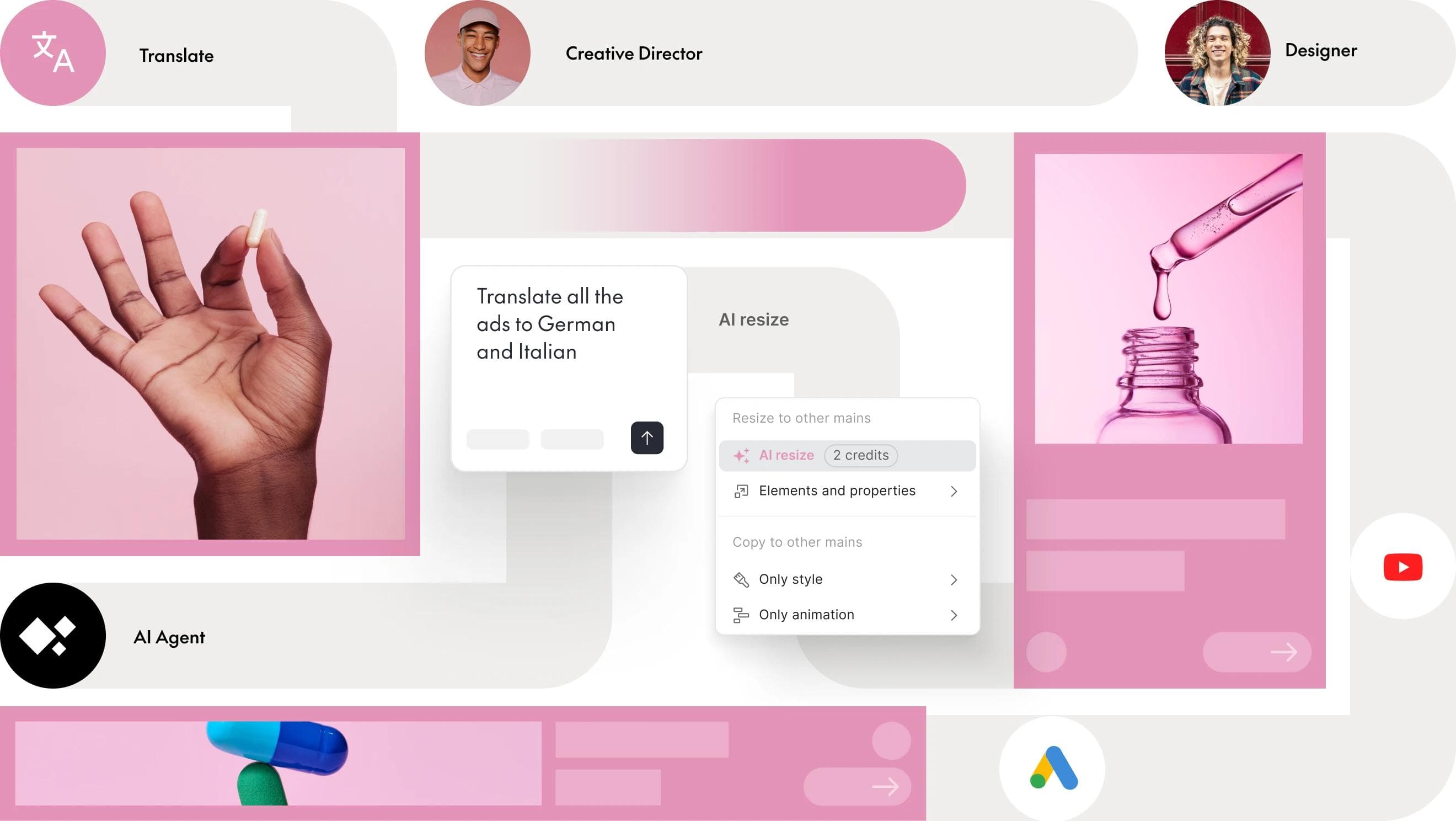
The teams seeing real results share a common approach. They use AI to automate production busywork (resizing, reporting, repetitive tasks) while keeping humans focused on strategy and creative decisions.
This isn't about replacing marketers. It's about freeing them to do work that actually requires human judgment: understanding customers, crafting compelling narratives, making strategic bets.
The Brief was built on exactly this philosophy. Machine precision handles the heavy lifting. Human brilliance drives the strategy. That combination separates teams that merely use AI tools from teams that win with them.
FAQs about AI tools for marketing
Which AI marketing tool is best for small business teams?
Canva, Buffer, and Mailchimp all offer AI features without enterprise complexity or pricing. Start with whichever addresses your most pressing bottleneck.
Can AI marketing tools replace human marketers?
AI automates repetitive production tasks but cannot replace human creativity, strategic thinking, and brand judgment. The best results come from humans and AI working together.
How much do AI marketing platforms typically cost?
Pricing ranges from free tiers to enterprise contracts. Most tools offer tiered plans based on usage, features, and team size.
What is the fastest way to start using AI for marketing?
Pick one specific workflow bottleneck - like content drafting or ad resizing - and solve that first. Trying to transform everything at once usually leads to nothing changing at all.
7 days free on us
Let's put these insights into action. Build, scale, and automate campaigns with AI-powered workflows.

