

Creatopy is now The Brief.

Creatopy is now The Brief.
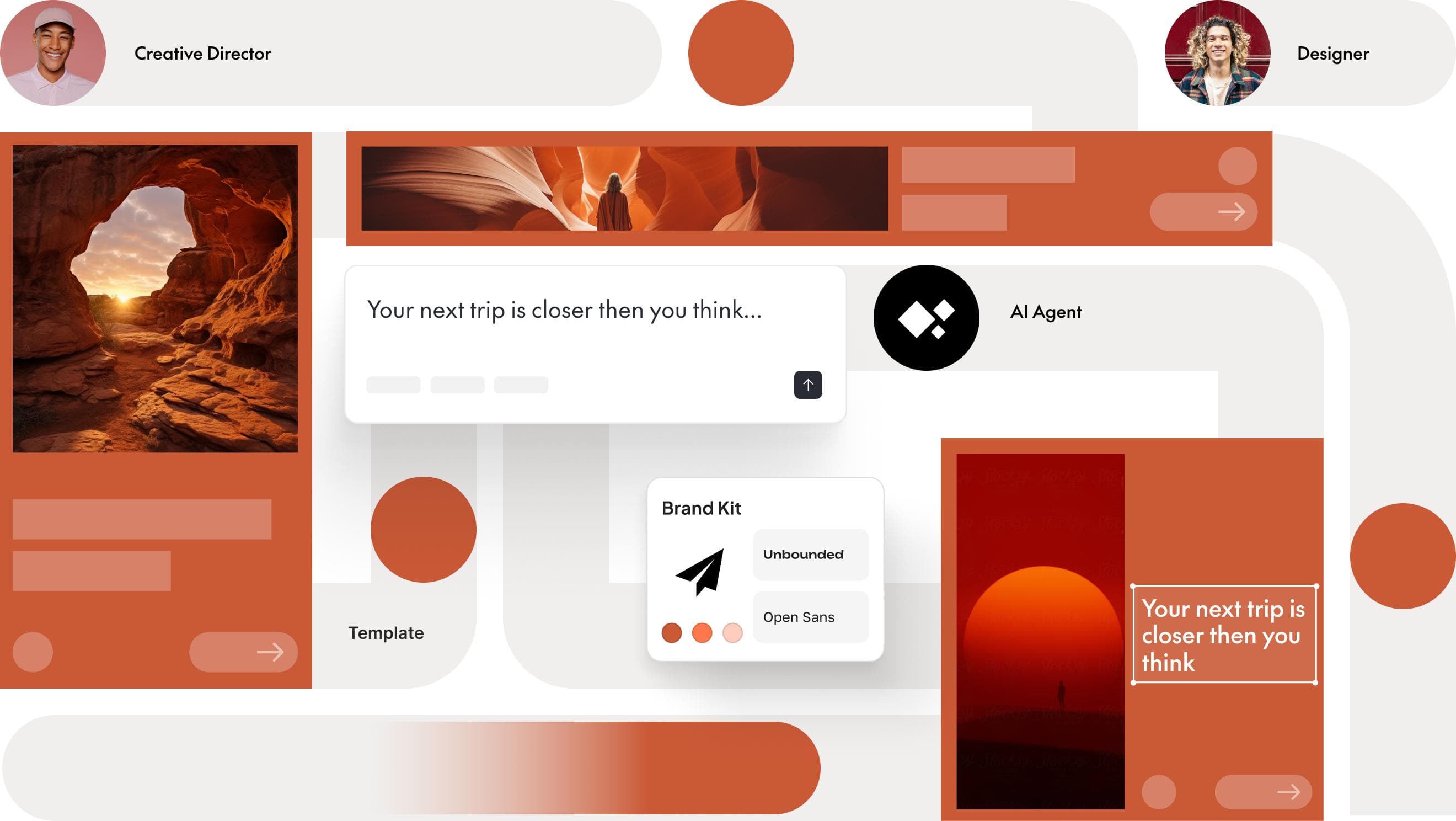
Your design team is buried in resize requests. Your performance marketers are waiting on creative. And somewhere in a shared drive, there's a file called ‘final_final_v8.psd’ that nobody can find.
AI for ads changes that equation. These tools automate the production grind—generating images, video, and copy at a pace that would take a human team weeks—so you can actually focus on strategy. This guide covers how AI ad generators work, which tools are worth your time, and how to use them to create campaigns that convert.
AI for ads is software that uses artificial intelligence to generate, optimize, or manage advertising creative and campaigns. In practical terms, it automates the work that used to eat up your week—writing copy, generating images, creating video, resizing assets for different platforms, and even predicting which ads will perform best before you spend a dollar.
You can think of it as a smart assistant for your marketing team. You provide the inputs (your brand, your audience, your goals), and the AI handles the production work.
The landscape breaks down into three main categories:
The real shift here isn't just speed. It's the connection between creative production and performance data, so every campaign learns from the last one.
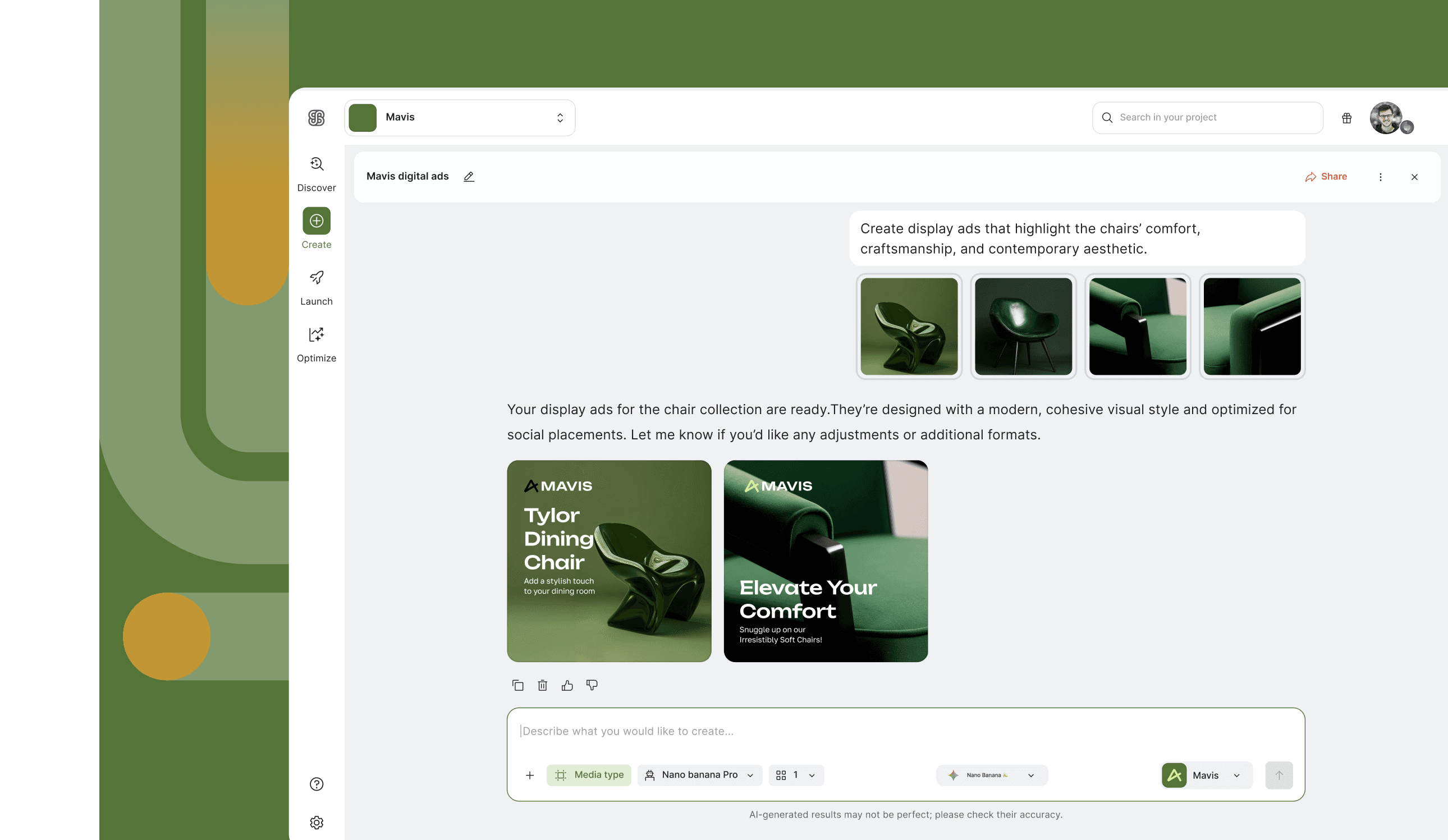
Traditional creative cycles take days or weeks. Meanwhile, competitors are testing dozens of variations and learning what converts while you're still waiting on design revisions. That gap is why marketing teams are turning to AI ad generators. Gartner found 77% of GenAI-adopting organizations already use it for creative development.
Here's what's driving adoption:
The teams seeing the biggest wins aren't just using AI to work faster. They're using it to learn faster: running more experiments, gathering more data, and making smarter decisions with every campaign cycle.
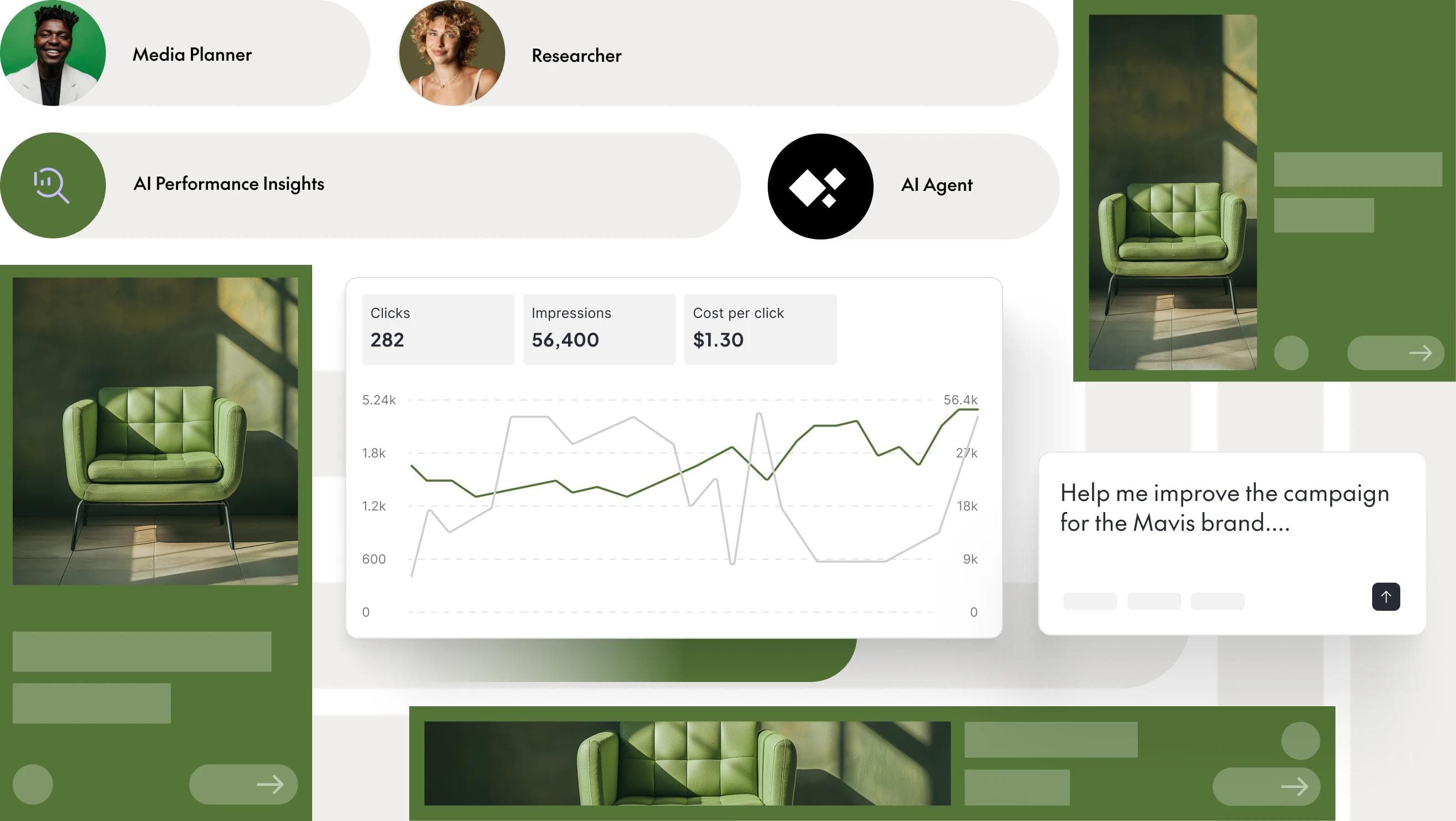
Not all AI ad tools deliver the same results. Before committing to one, it helps to compare options based on what actually matters for your workflow rather than marketing claims.
Look closely at the AI-generated visuals and copy. Can the tool consistently produce content that matches your brand's specific aesthetics, or does everything look generic? The best tools offer variety without sacrificing quality.
Verify that the tool supports the formats you actually use. Does it handle static images, video, and animated content? Check if it can generate assets in the aspect ratios required for different platforms: Instagram Stories (9:16), Facebook feeds (1:1), YouTube (16:9).
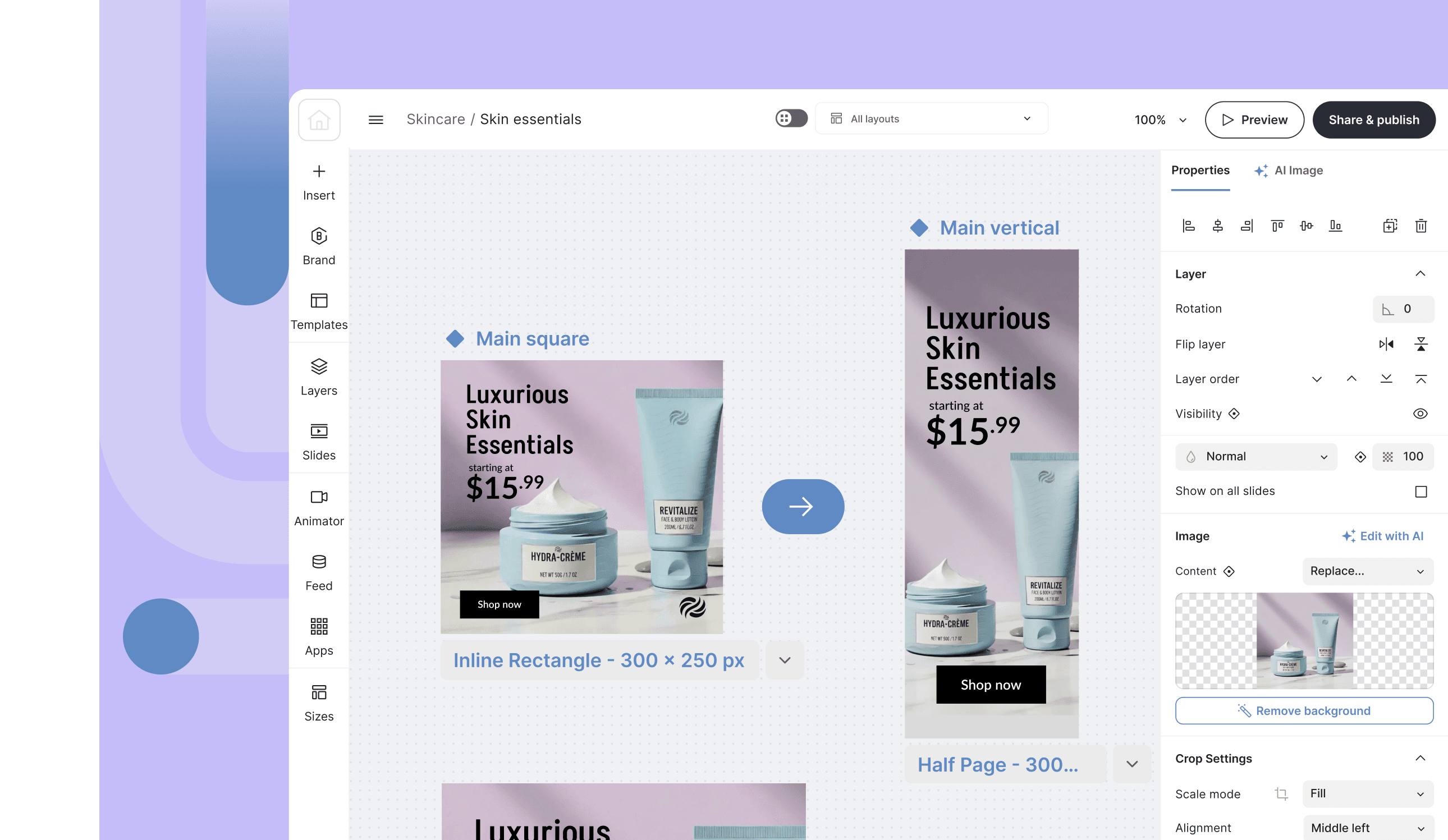
For any team, but especially those in regulated industries, brand governance matters. Look for features like brand controls that lock in logos and colors, template locking to prevent off-brand creations, and built-in approval workflows.
Evaluate how the tool connects with your advertising channels. Does it offer native integrations with Meta, Google Ads, TikTok, and LinkedIn? For larger advertisers, check for connections to programmatic ad servers.
Understand the pricing model before you sign up. Common structures include per-credit systems, per-asset pricing, or subscription tiers with varying limits. Be wary of "unlimited generations" - fair use policies or slower processing often apply after a certain threshold.
Consider how the tool fits into your existing operations. Look for collaboration features like shared workspaces, user permissions, and feedback loops. The right tool enhances your workflow rather than disrupting it.

Here's a curated list of AI ad tools, each with a specific use case and standout capability.
| Tool | Best for | Key capability |
|---|---|---|
| The Brief | Integrated marketing workflows | Connected creative and performance system |
| AdCreative.ai | Performance-focused teams | AI-powered performance scoring |
| Creatify | E-commerce video ads | URL-to-video generation with AI avatars |
| Arcads | UGC-style video content | AI actors for testimonial-style ads |
| Canva | Simple, accessible ad creation | User-friendly design with AI features |
| Typeface | Enterprise brand governance | Centralized, brand-safe content creation |
| Smartly | Large-scale programmatic advertising | Creative automation and optimization |
The Brief is a connected system built by marketers, for marketers. Rather than adding another point solution to your stack, it acts as an operating system for the entire campaign lifecycle - connecting creative production to campaign performance so every cycle gets smarter.
AdCreative.ai focuses on conversion optimization. Its standout feature is the ability to provide a performance score for creatives before launch, helping marketers prioritize the most promising variations.
Creatify is known for its URL-to-video capability, turning a product page into a video ad in seconds. It also includes AI avatar features for creating spokesperson-style videos without hiring talent.
Arcads specializes in UGC-style video ads. It uses AI actors to produce authentic-looking testimonial videos, eliminating the cost and logistics of working with real creators. The Brief offers a similar capability through its UGC video feature.
Canva has integrated AI features into its user-friendly platform. It's a solid choice for teams that prioritize simplicity and ease of use over advanced automation.
Typeface is an enterprise-grade platform that emphasizes brand control and content governance. It's designed for large organizations that require all AI-generated content to be secure and on-brand.
Smartly is built for large-scale programmatic creative automation. It excels at helping advertisers manage and optimize creative across thousands of campaigns simultaneously.
This workflow applies to most AI ad creators and gives you an actionable path from concept to published campaign.
Start with strategy, not technology. Clarity on your objectives (clicks, conversions, awareness) and target audience gives the AI the context it requires to generate relevant creative. Better inputs lead to better outputs.
Feed the AI your brand's raw materials. Most tools let you upload a brand kit with logos, colors, and fonts. Many can also pull product images and descriptions directly from a URL.

Select your desired formats (image, video), enter prompts describing your concept, and choose creative styles. The AI produces multiple variations based on your inputs.
Always include a human review step. Evaluate the AI-generated ads, adjust copy for tone, swap images that don't fit, and ensure everything aligns with your brand guidelines. This is where strategic oversight matters most.
Once you're satisfied, choose your output option. Download assets, push them directly to an integrated ad manager, or use a native publishing feature.
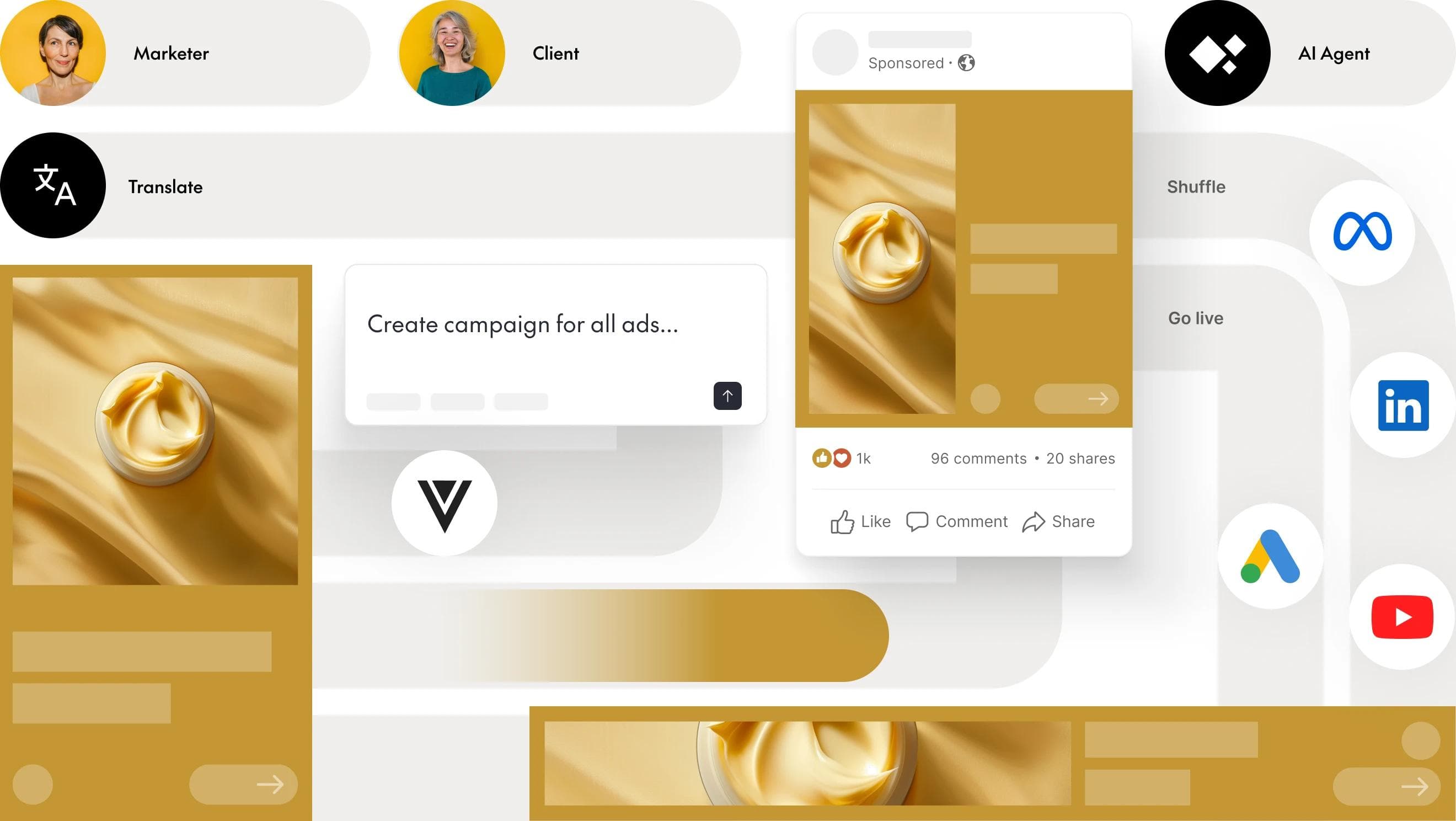
The quality of your AI-generated ads depends directly on the quality of your prompts. A well-structured prompt gives the AI clear, specific instructions rather than vague direction.
Include the following elements:
Here's an example: "Create a Facebook feed ad for first-time parents. The goal is to generate leads for our sleep-training guide. Use soft, calming colors and an image of a peaceful sleeping baby. The CTA is 'Download Now.'"
Maintaining brand consistency becomes challenging when you're generating high volumes of creative. Here's how to address it:

Many AI ad tools include predictive scoring features. The AI analyzes creative elements against historical data to estimate likely engagement or conversion rates before you spend anything.
Predictive AI evaluates several factors:
Predictive scoring doesn't replace testing, but it helps you prioritize which variations to test first. Tools like The Brief's Optimize Agent take this further by turning performance data into a clear plan of action.
The goal of adopting AI isn't just to create ads faster by adding another point solution. It's to build an integrated system that reclaims strategic time for your team - McKinsey estimates gen AI could increase marketing productivity by $463 billion annually.
Instead of juggling disparate tools for generation, collaboration, and analytics, a connected system links creative production directly to campaign performance. You move from reactive busywork to proactive, data-driven strategy. If you're ready to move beyond the franken-stack of disconnected tools, The Brief is the system that connects all of it.
ChatGPT excels at generating ad copy, brainstorming concepts, and writing scripts. However, it can't produce finished visual assets or connect to ad platforms to publish campaigns. For that, you'll want a purpose-built AI advertisement generator.
The best free option depends on your use case. For basic static ads, Canva offers a robust free tier. For more advanced AI ad creatives, tools like AdCreative.ai provide limited free trials.
AI-generated ads are generally allowed on major platforms like Meta and Google. You're still responsible for ensuring content meets creative policies—pay attention to rules around misleading claims and disclosure requirements. Review the Meta ad specifications and Google ad specifications to stay compliant.
No. The goal is to augment, not replace, your creative team. AI tools automate repetitive production tasks like resizing and versioning, freeing your human experts for strategy, brand judgment, and breakthrough creative direction.
Let's put these insights into action. Build, scale, and automate campaigns with AI-powered workflows.

