

Creatopy is now The Brief.

Creatopy is now The Brief.
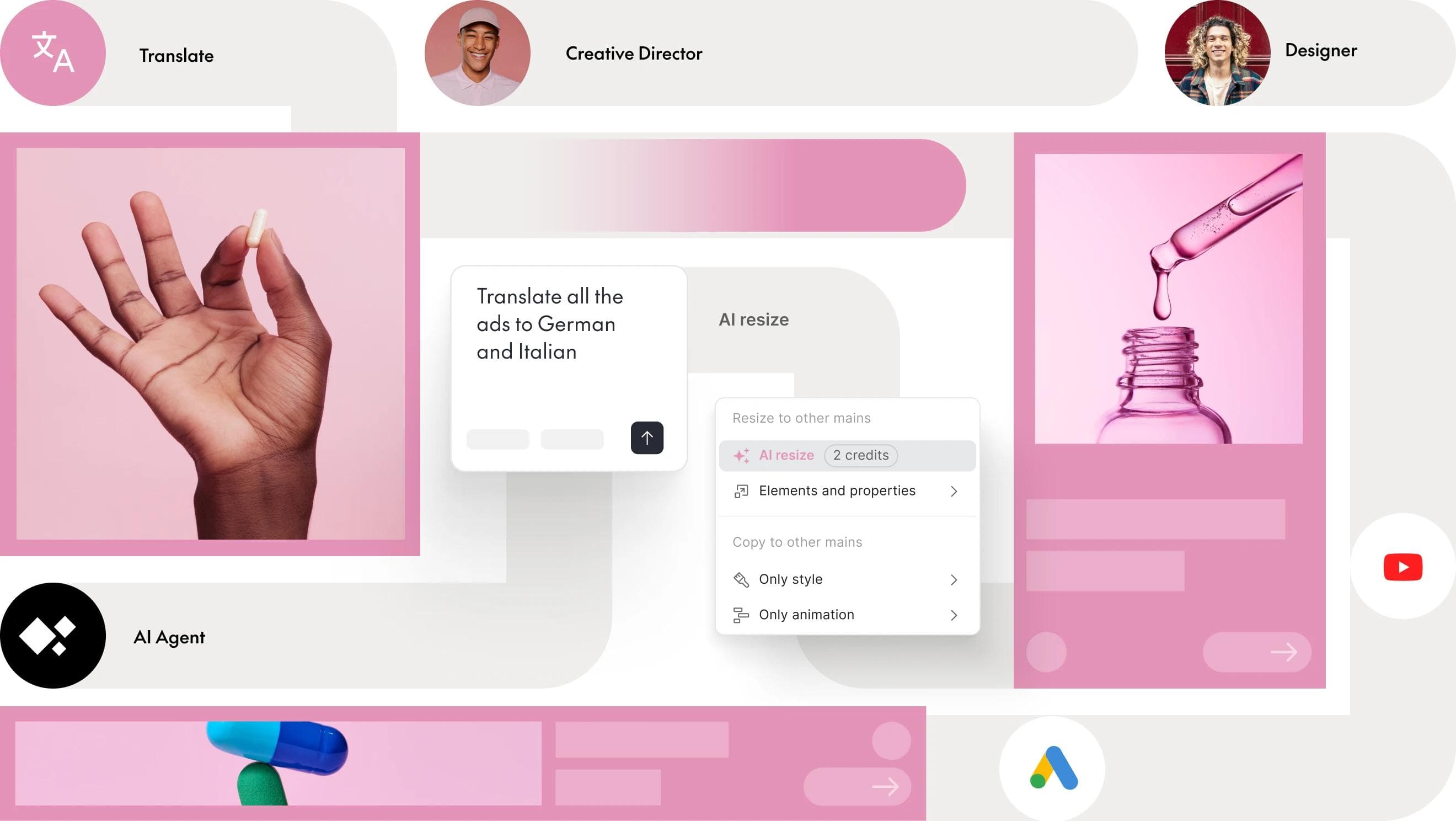
Marketing teams are producing more ad variations than ever, and the manual work of creating, resizing, and adapting each one is eating into time that could go toward strategy. AI ad creative generators solve this by automating the production process, turning a single brief into dozens of on-brand ad variations in minutes.
This guide covers how these tools work, the features that matter most, and how leading platforms compare, so you can find the right fit for your team's workflow.
An AI ad creative generator is software that uses artificial intelligence to automatically produce advertising visuals, copy, and variations. You give it inputs - brand assets, product URLs, a text prompt - and it generates ready-to-use ad creatives in seconds. You might also hear these tools called AI ad makers or ad creator AI platforms.
The difference from traditional design tools comes down to automation. With classic design tools you manually create every asset. With an AI ad generator, the software handles the entire creative process, from initial concept to finished variations across formats and sizes.

The process is more sophisticated than it looks. AI advertising tools learn from vast datasets of successful ads - analyzing which colors, layouts, copy structures, and imagery styles tend to drive clicks and conversions. When you provide your inputs, the AI applies those patterns to generate creatives optimized for engagement.
Here's the typical workflow. First, the tool ingests your brand assets and campaign brief. Then it generates a range of visuals, headlines, and body copy, combining elements in ways that align with proven performance patterns. Finally, many platforms score each variation's predicted effectiveness before you even launch.
Not all AI ad generators work the same way. The features that matter depend on your team's size, industry, and workflow complexity.
Brand kits store your logos, fonts, colors, and guidelines so every AI-generated ad stays on-brand. Template libraries provide professionally designed starting points that save time. Together, they solve one of the biggest challenges in scaled ad production: maintaining consistency when multiple people create assets.

This is where AI really shines. Batch generation lets you create dozens—or hundreds—of ad variations from a single set of inputs. Want 50 versions of a product ad for A/B testing? Or localized creatives for 12 different markets? Batch generation handles it in minutes.

Built-in integrations eliminate the export-upload-configure cycle. You generate creatives, review them, and publish directly to Meta, Google Ads, TikTok, or other platforms—all without leaving the tool.

For agencies managing client feedback or enterprise teams with compliance requirements, workflow features matter. Look for tools that let stakeholders review, comment, and approve creatives directly within the platform.

Some platforms include libraries of competitor ads or top-performing creatives from across industries. These help inform strategy, identify trends, and spark ideas for your own campaigns.

Some advanced platforms score creatives before launch, predicting metrics like click-through rates or conversion potential. Instead of producing assets and hoping for the best, you can focus on variations the AI identifies as high-potential.
AI ad generators support multiple formats to match different channels and campaign goals.
AI can instantly generate standard image ads in all required sizes for programmatic display, website banners, and retargeting. These foundational formats remain essential for brand awareness and traffic generation.
AI video capabilities turn static product images or simple prompts into short-form video ads. According to the IAB, 86% of ad buyers are using or planning to use GenAI for video creative. The tools automatically add motion, text overlays, and background music - making video production accessible without specialized skills.
Each social platform has unique specifications. AI generators produce creatives optimized for Meta, TikTok, LinkedIn, and others, including stories, carousels, and in-feed posts that look native to each channel.
For e-commerce, AI can connect to product catalogs and automatically generate personalized ads for retargeting campaigns. Each ad features specific products a user viewed, increasing relevance and conversion rates.
| Tool | Best for | Key differentiator | Pricing model |
|---|---|---|---|
| AdCreative.ai | Performance marketers | Conversion-focused creatives with performance prediction | Subscription/Credits |
| Creatify | AI video ads | AI avatars and URL-to-video generation | Subscription/Credits |
| Canva Grow | Non-designers / small teams | Templates + AI-assisted design | Subscription |
| AdGen AI | Agencies and high-volume testing | Rapid batch generation for testing | Subscription |
| The Brief | Scaling marketing teams | End-to-end ad workflows and production at scale | Subscription / enterprise plans |
AdCreative.ai focuses on conversion-optimized creatives. Its standout feature is a performance score that estimates how well an ad may perform before launch. E-commerce brands and performance marketing teams tend to favor it for data-driven creative decisions.
Creatify excels at video ad generation, offering AI avatars and URL-to-video capabilities. By providing a product link, it can generate dynamic video ads with minimal input. It’s particularly effective for TikTok-style content and short-form social media.
Canva Grow refers to Canva’s more advanced features aimed at scaling content production. It works well for small businesses and teams already familiar with the platform, combining templates with AI-assisted design and basic integrations to simplify ad creation and publishing.
AdGen AI is built for speed and scale. Its strength lies in rapidly generating multiple ad variations, allowing teams to create and test campaigns more efficiently. Agencies and high-volume advertisers find it useful for ongoing creative testing.
The Brief is designed for marketing teams that need to manage ad creative production at scale. It brings together AI-assisted creation, structured workflows, and collaboration tools to help maintain brand consistency across campaigns. Compared to simpler tools, it focuses more on process, coordination, and scalability, which may require some initial setup.
Start by uploading your brand's foundational elements into the platform's brand kit. Logos, color palettes, fonts, and brand rules go here. This ensures every ad the AI generates stays consistent from the start.

Choose your ad type and destination. The AI automatically applies correct dimensions and specifications- whether that's an Instagram Story, Google Display banner, or TikTok video.
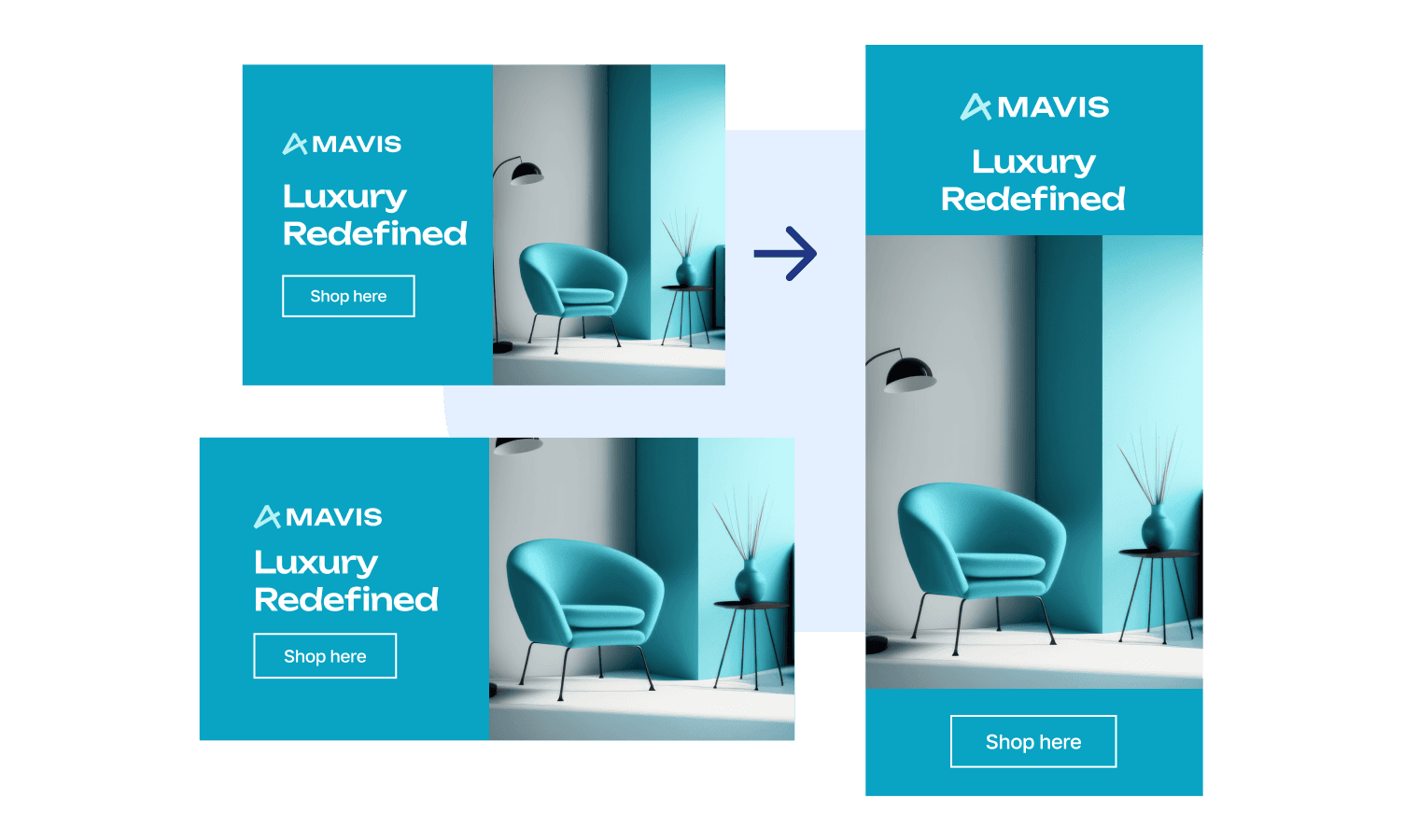
With inputs ready, instruct the AI to generate variations. The platform produces multiple options in seconds. From there, you can review outputs, refine copy, swap images, or make adjustments.
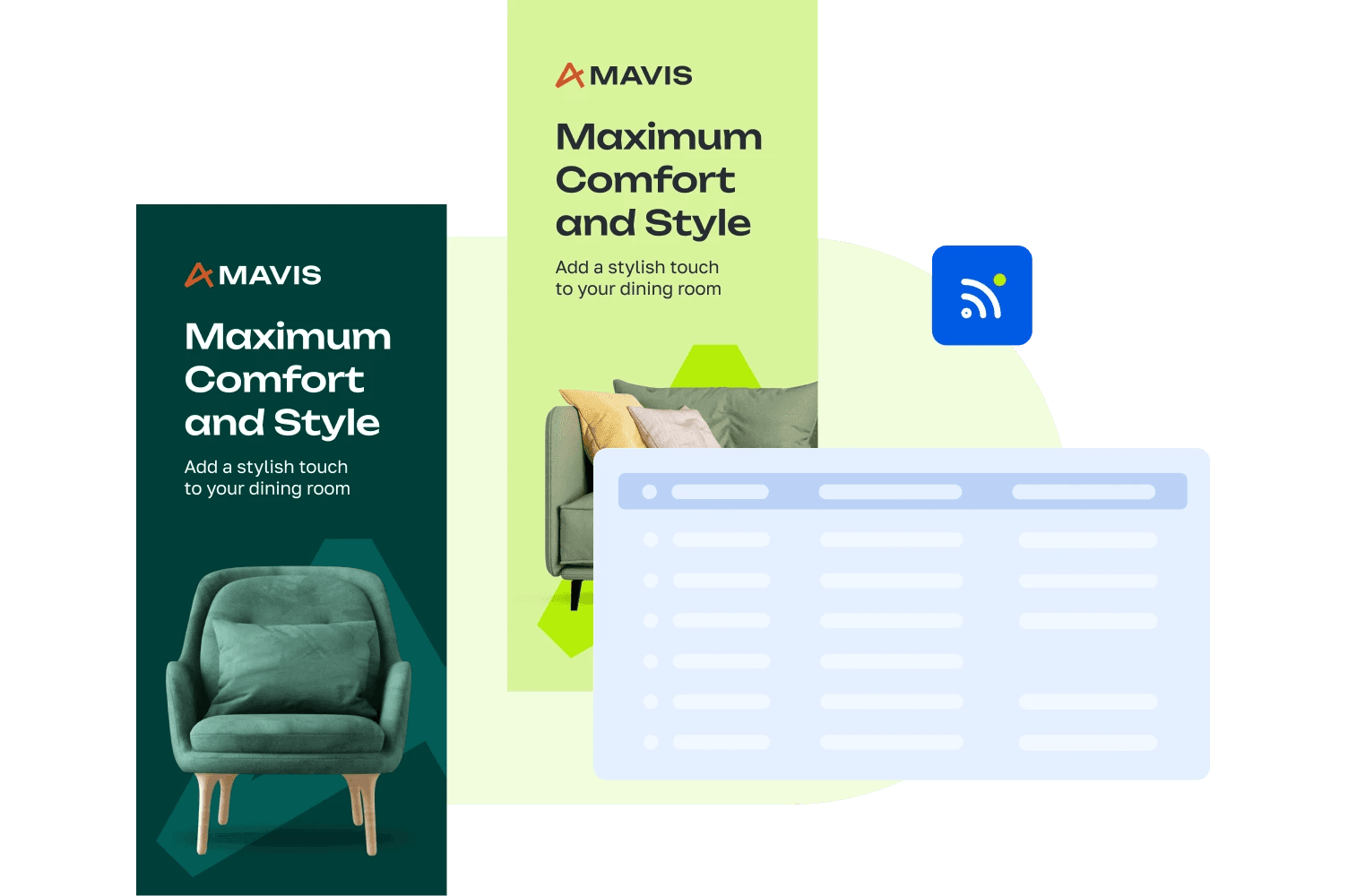
The final step involves review and approval, which can happen within the platform. Once approved, publish directly to connected ad networks or export files for manual upload.

E-commerce teams benefit from AI's ability to handle high-volume product ad production. Product catalog integration and dynamic creative optimization enable personalized ads at scale, improving retargeting performance.
For agencies, AI ad generators act as a force multiplier. Multi-client management, white-labeling, and built-in approval workflows streamline operations across your entire client roster.
Enterprise teams rely on AI for brand governance and compliance. Sophisticated approval workflows, global campaign consistency, and deep martech integrations make these platforms essential for large-scale operations.
AI ad generators offer significant cost savings compared to hiring designers or agencies. Their ease of use empowers non-designers to create professional-quality ads, leveling the playing field.
Integration transforms an AI ad generator from a standalone tool into a connected part of your marketing ecosystem. The most effective platforms connect to:
Platforms designed as connected systems, rather than isolated point solutions, create seamless workflows where data and assets flow freely between tools. The Brief, for example, operates as a central hub for creative operations rather than another disconnected app in your stack.

To evaluate whether your investment is paying off, track metrics across four areas:
Compare these against your previous manual processes. According to IAB research, cost efficiency is now the top benefit of AI in advertising, cited by 64% of respondents in 2026. The compound effect of faster production, more testing, and better performance typically delivers substantial returns over time.
The real power of AI in advertising isn't replacement, it's amplification. McKinsey estimates gen AI could boost marketing productivity by $463 billion annually. The best platforms automate repetitive, time-consuming production work so human strategists can focus on what they do best: understanding audiences, developing insights, and making creative decisions.
Think of AI ad generators as tools that serve human brilliance. They handle the "how" so marketers can focus on the "why." That's the philosophy behind platforms like The Brief—machine precision working alongside human creativity, not instead of it.
Yes. Most platforms include brand kit features that store approved logos, colors, fonts, and guidelines. Every generated ad stays on-brand regardless of who creates it.
Several AI ad generators offer free tiers or trials with limited credits, including Canva, AdCreative.ai or The Brief. These allow teams to test capabilities before committing to paid plans.
AI-generated ads often perform comparably to manually designed ads, particularly when the AI is trained on high-converting creative data and outputs are refined by human marketers before launch.
E-commerce, retail, agencies, and any industry requiring high-volume ad production across multiple channels and markets see the greatest efficiency gains.
Enterprise-grade platforms include approval workflows and audit trails that support compliance. Regulated industries like pharma and finance can verify specific capabilities for their requirements.
Most platforms can be configured with brand assets and guidelines within minutes to a few hours. Initial ad generation is possible immediately after setup.
Let's put these insights into action. Build, scale, and automate campaigns with AI-powered workflows.

