

Best Retail Advertising Software for Scaling Retail Campaigns
PUBLISHED MAY 22ND 2026
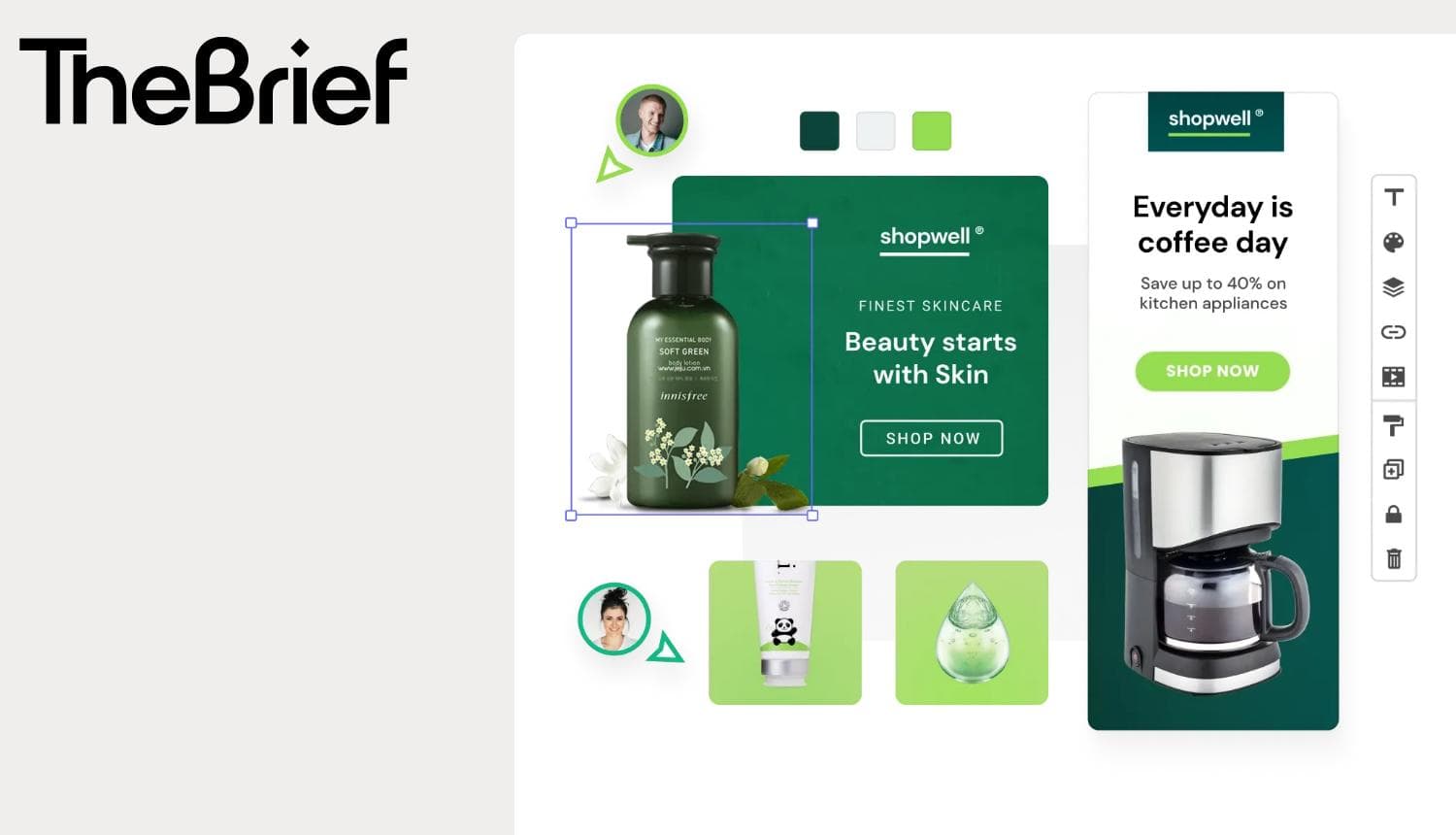
Retail advertising used to mean negotiating endcap placements and printing circulars. Now it means producing hundreds of ad variations across Amazon, Walmart, Instacart, and Target - each with different specs, audiences, and performance expectations.
The software landscape has fragmented to match. Some platforms help you buy media, others help you create it, and a few attempt both. This guide breaks down what retail advertising software actually does, which platforms handle which problems, and how to evaluate options based on your specific bottlenecks.
What is retail advertising software
Retail advertising software enables brands and retailers to create, manage, and optimize ad campaigns across online stores, physical locations, and off-site channels. Think of it as the engine that powers everything from the banner ads you see on Amazon to the digital displays in your local grocery store.
Here's where it gets interesting. Some platforms focus on media buying, helping you purchase ad placements across retail networks like Walmart Connect or Target Roundel. Others specialize in creative production, actually generating the ad assets at scale. The most effective retail advertising setups typically combine both.
What do these platforms actually do? The core capabilities break down like this:
- Creative production: Generating ad assets across formats, sizes, and channels without starting from scratch each time
- Campaign management: Coordinating ads across multiple retail media networks from one place
- Performance optimization: Analyzing what's working and adjusting creative based on real data
- Brand governance: Keeping every output on-brand, even when different teams create assets

Why retail advertising is changing for modern brands
Retail media networks have quietly become one of the fastest-growing advertising channels, reaching $71 billion in US ad spend in 2026. Amazon, Walmart, Instacart, and Target now let brands reach shoppers right at the moment of purchase - with first-party data that makes targeting remarkably precise.
This shift has changed what marketing teams face daily. A campaign that once required a handful of ad sizes now demands hundreds of variations across multiple retail platforms. Each network has different specs, different audience segments, and different creative requirements.
The pressure points are stacking up:
- Channel fragmentation: Retail media networks are capturing budgets that used to go to traditional digital
- Personalization expectations: Shoppers respond better to creative that feels relevant to their location, preferences, and purchase history
- Speed as advantage: Competitors launching faster means missed opportunities for slower teams
- Attribution demands: Leadership wants to connect creative directly to sales, not just impressions
Manual processes that worked a few years ago simply can't keep pace anymore. 77% of marketing teams report increased volume year-over-year while nearly half struggle to keep up.
The hidden cost of manual retail campaign production
You've probably lived this scenario. A campaign that could take days stretches into weeks because the design team is buried in resize requests. Meanwhile, someone in a regional office creates an off-brand asset because they couldn't wait for the queue to clear.
The friction points compound quickly. Resizing and reformatting alone can eat hours - adapting a single master asset for each platform's specifications. Then there are approval delays, with campaigns stalled in email threads waiting for sign-off. Brand drift creeps in when non-designers create assets that don't match guidelines. And perhaps most frustrating: data blindness, where there's no clear connection between which creative variations actually drive performance.
The real cost isn't just time. 40–50% of creative assets never get activated in campaigns. It's the strategic work that never happens because your team is stuck in production mode.
Best retail advertising software platforms for scaling campaigns
The platforms below represent different approaches to retail advertising. Some focus on creative automation, others on media buying optimization. Your choice depends on whether your primary bottleneck is producing creative or managing media spend.
The Brief
The Brief auto-generates multi-format ad sets from data feeds, featuring built-in AI product photography and dynamic localization like weather triggers. Complete with automated brand governance and direct ad serving, it launches compliant creative straight to networks to eliminate manual export and upload loops.
Criteo Commerce Max
Criteo operates one of the largest retail media networks, connecting brands with shoppers across thousands of retailer sites. Commerce Max is their demand-side platform for buying retail media at scale. It excels at media buying and audience targeting rather than creative production.
Skai
Skai offers enterprise-level campaign management across Amazon, Walmart, Instacart, and other major retail networks. The platform emphasizes analytics, automated bidding, and cross-network reporting. Teams managing significant retail media budgets across multiple networks often use Skai to centralize campaign oversight.
Smartly
Smartly combines creative automation with social and retail ad production using templated creative workflows. It's particularly useful for teams producing high volumes of social-first creative that also runs across retail channels.
Quartile
Quartile focuses specifically on AI-driven optimization for Amazon advertising, with automated bidding and budget allocation. Brands with heavy Amazon ad spend often use Quartile to maximize return on that specific channel.
Celtra
Celtra serves enterprise brands producing high volumes of display and video ads. The platform offers strong integrations with media platforms and fits well into existing agency workflows.
Storyteq
Storyteq specializes in scaling video and display production through dynamic content and localization features. Brands running campaigns across multiple markets with different languages use Storyteq to automate adaptation.
| Platform | Best for | Primary strength |
|---|---|---|
| The Brief | Scaling ad creative production | AI-powered automation with human control |
| Criteo Commerce Max | Retail media buying | Access to retail media networks |
| Skai | Cross-network campaign management | Analytics and optimization |
| Smartly | Social and retail ad creation | Templated creative at scale |
| Quartile | Amazon advertising | Automated bidding |
| Celtra | Enterprise display and video production | Rich media assets and agency workflow integrations |
| Storyteq | Multi-market campaign localization | Automated video and display asset adaptation |
Key features to look for in retail advertising software
Not every platform offers the same capabilities. Understanding which features matter most for your specific bottlenecks helps narrow the field quickly.
AI-powered creative automation
AI can generate ad variants, resize assets automatically, and personalize creative based on product data - all without manual intervention. The best implementations handle mechanical tasks while you retain creative control over strategy and brand expression.

Multi-channel ad production and publishing
The ability to create ads for multiple retail media networks, social platforms, and display networks from a single workflow eliminates rebuilding campaigns in each platform's native tools.

Automated network specification compliance
The ability to instantly generate asset sets that match the exact aspect ratios, file weights and technical rules of networks like Amazon Ads or Walmart Connect. High-performing platforms use data feeds to update prices, inventory changes and promotional imagery across these variations automatically without manual design requests.

Brand governance and compliance controls
Automated enforcement of brand guidelines prevents off-brand creative from reaching the market. For regulated retail categories like alcohol or pharmaceuticals, compliance controls become essential.

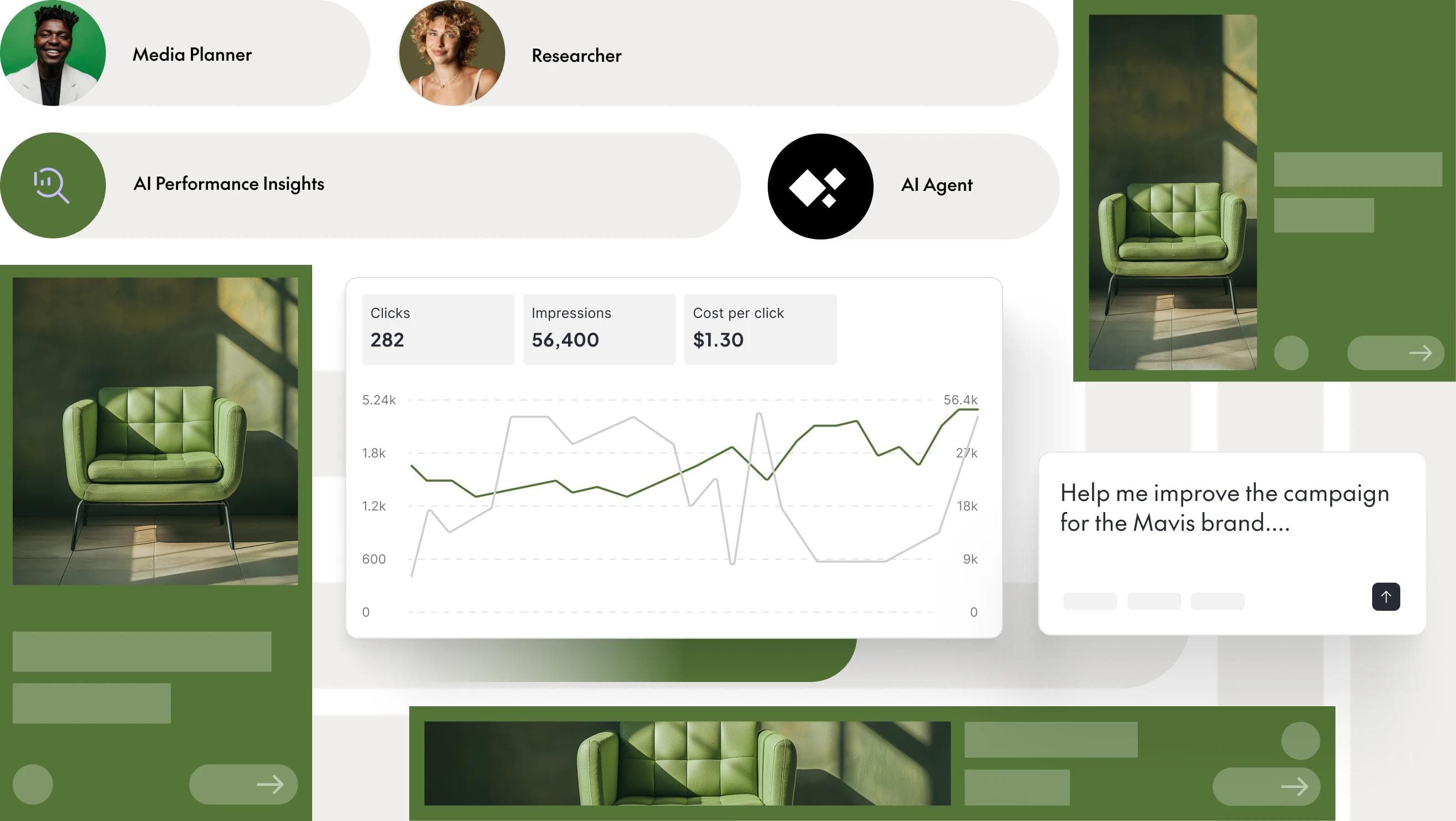
Performance analytics and creative reporting
Dashboards connecting creative variations to metrics like CTR, ROAS, and CPA close the loop between what you create and what performs. This data feeds back into future creative decisions.
Workflow and approval automation
Automated routing, version control, and approval workflows eliminate email chains and file chaos. Clear audit trails and role-based permissions keep everyone aligned.

How to choose the right retail advertising platform
Selecting a platform requires matching capabilities to your specific situation. A methodical evaluation prevents expensive mistakes.
1. Map your campaign volume and SKU complexity
Start by quantifying how many ads you produce monthly and how many product SKUs require unique creative. High-volume, high-SKU operations benefit from robust automation. Smaller operations might prioritize ease of use.
2. Audit your existing martech and ad stack
Identify your current tools for design, project management, and ad serving. Understanding integration requirements upfront prevents implementation headaches later. Platforms like The Brief offer integrations that connect your marketing stack to existing tools.
3. Score platforms on AI and automation capabilities
Evaluate which tasks each platform can truly automate versus which still require manual work. Ask vendors for specific examples of time savings from current customers.
4. Validate asset compliance for your target retail channels
Ensure the software can simultaneously export or serve perfectly formatted creative built for the unique display specifications of your exact retail distribution channels. The goal is eliminating the manual resizing loops that happen between asset creation and media placement.
5. Pilot with a high-volume campaign
Test the platform on a real campaign with significant volume before full commitment. Pilots reveal workflow friction that demos often hide.
How to scale retail ad creative without adding headcount
Producing more ads doesn't have to mean hiring more people. The right software shifts the ratio of strategic work to production work dramatically.
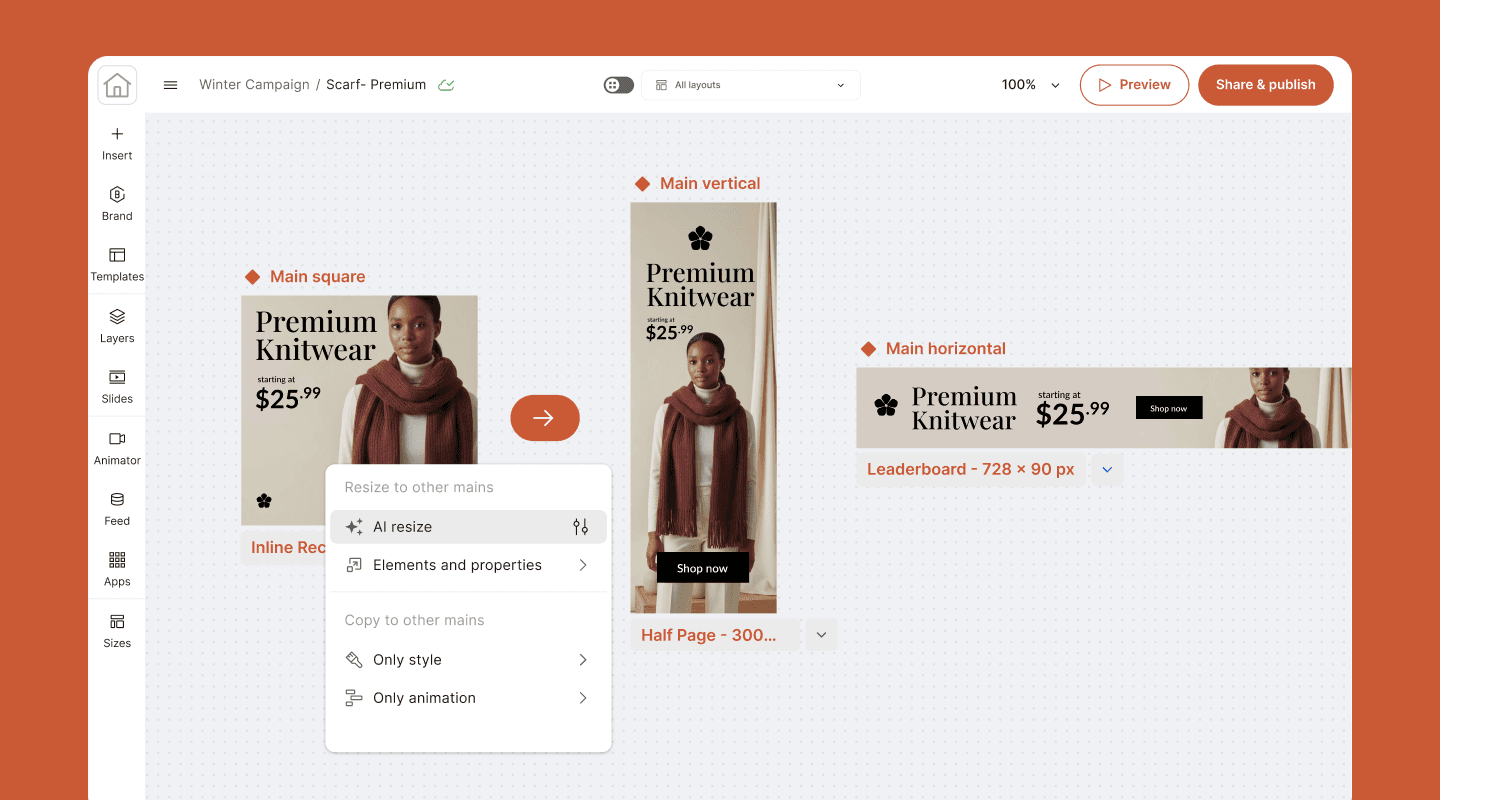
1. Automate resizing and localization
AI can instantly adapt master creative to required sizes and regional variations. What once took hours of manual work happens in minutes with tools like an online banner resizer.
2. Generate data-driven creative variants
Feed product data (pricing, inventory, promotions) directly into your creative workflow. The system produces personalized ads automatically based on that data using tools like a feed ad builder.

3. Connect creative output to performance data
Close the loop between what you create and what performs. Use performance insights to inform which creative directions deserve more investment.

4. Centralize brand assets and approvals
A single source of truth for brand assets and approval workflows eliminates scattered files and bottlenecks. Brand management tools ensure everyone works from the same foundation.

Reclaim strategic control of your retail advertising
The best retail advertising software doesn't just make production faster. It fundamentally changes how your team spends time. When AI handles resizing, reformatting, and variant generation, marketers can return to strategic and creative work that actually differentiates brands.
That's the philosophy behind platforms like The Brief: machine precision handling mechanical tasks, human brilliance focused on ideas that matter.
Frequently asked questions about retail advertising software
How is retail advertising software different from a retail media network?
Retail advertising software helps you create and manage ad campaigns. A retail media network (like Amazon Ads or Walmart Connect) is the platform where ads are displayed to shoppers. You typically use both: software to produce creative efficiently and network access to reach your audience.
Does retail advertising software work for brick-and-mortar stores?
Yes. Many platforms support in-store digital signage and localized campaign creation alongside e-commerce ad production. The same creative automation that scales online ads can adapt assets for physical retail environments.
How does creative software support Amazon and Walmart ad campaigns?
Creative production platforms automate the heaviest bottleneck of retail media: building the sheer volume of variations required by different networks. Instead of manually editing hundreds of individual product banners, the software uses your product data feeds to automatically format, scale and brand-lock your entire SKU catalog so assets are instantly ready for your media buying tools.
How quickly can a retail advertising platform be implemented?
Implementation timelines vary by platform complexity and your existing tech stack. Many cloud-based solutions can be operational within weeks rather than months, especially for teams with straightforward integration requirements.
Is AI-powered retail advertising software safe for regulated retail categories?
Leading platforms include brand governance and approval workflow features designed to maintain compliance. For industries like alcohol, pharmaceuticals, and financial services, look for platforms with robust audit trails and role-based permissions.

