

Best AI tools for product photography that actually look real in 2026
Ildiko Edit Orosz
May 8, 2026 - 16 min read
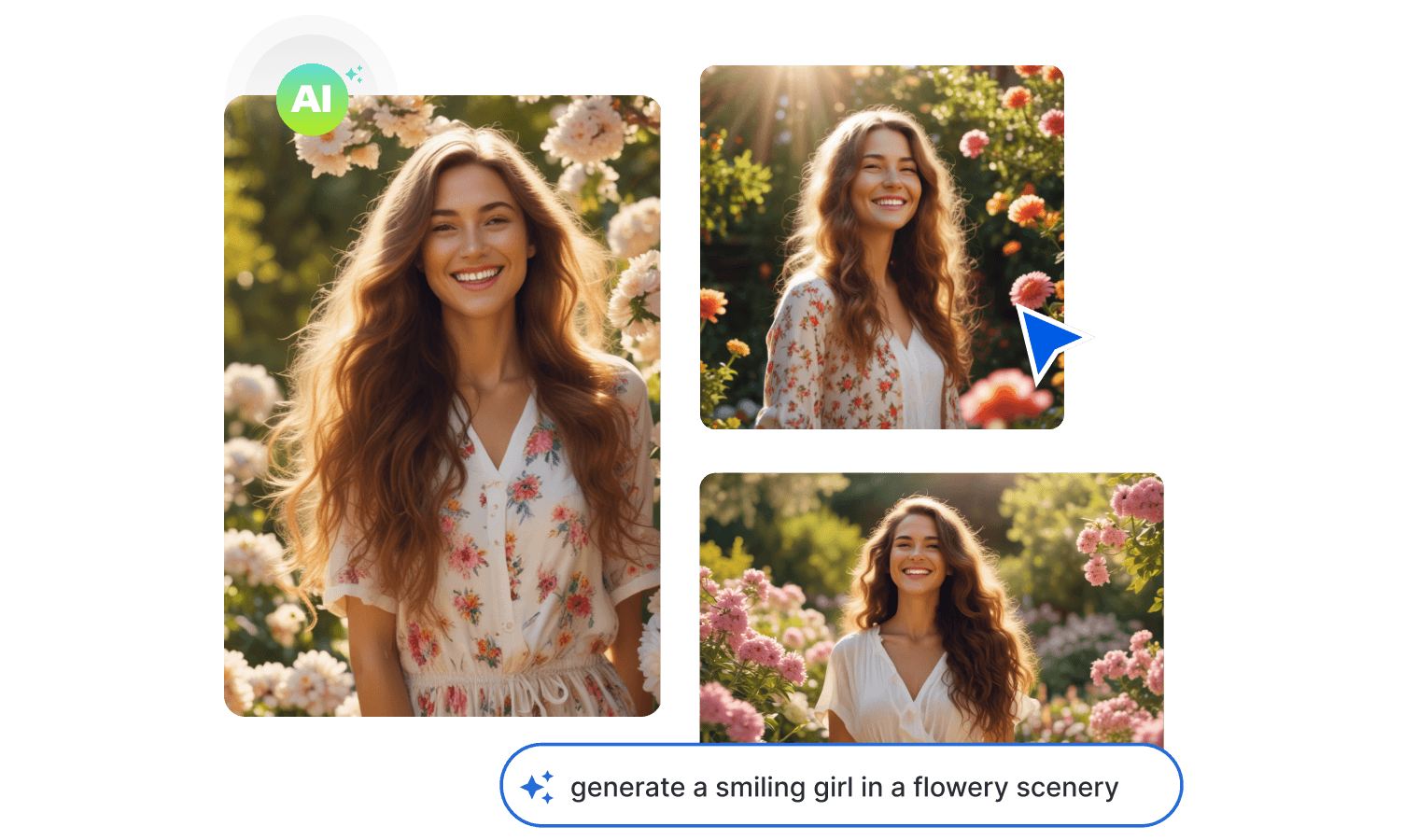
Your design team is buried in resize requests while your performance marketers wait for creative to test. Meanwhile, your competitors are launching campaigns in hours, not weeks.
AI ad image generators change this equation entirely: producing on-brand ad variations at scale without the production bottleneck. This guide covers what to look for in these tools, how they work, and which ones actually deliver for performance marketing teams.
An AI ad image generator creates advertising visuals from text prompts, product photos, or brand assets using artificial intelligence. You describe what you want or upload your product images and the tool produces ad-ready creative.
What separates AI ad image generators from general AI image tools like Midjourney or DALL-E? Ad-specific features. General tools create beautiful images, but they don't know that your Instagram Story ad requires a 9:16 ratio or that your brand uses Helvetica Bold. AI ad generators handle platform sizing, brand kit integration (your logos, fonts, and colors), and often publish directly to Meta or Google. That's the difference between a cool image and a usable ad.
Some AI ad tools generate pretty images that look nothing like your brand. Others create on-brand visuals but can't connect to your ad platforms. A Gartner survey found 81% of consumers tune out ads. Here's what separates tools that produce scroll-stopping ads from those that just make generic pictures.
Your ads represent your brand. Every single one. The best tools let you upload a brand kit so every generated image automatically uses your logos, fonts, and colors. For larger teams, governance features prevent anyone from accidentally publishing off-brand creative—no more rogue assets floating around. Learn more about brand management at scale.

A/B testing means running multiple ad versions to see which performs best. Instead of waiting on a designer for each variation, the right AI ad generator creates dozens from a single brief. You describe one concept, and the tool produces twenty versions with different headlines, layouts, or imagery. The batch ad design generator approach makes this possible at scale.

Direct integrations save hours of manual work. Look for tools that automatically resize your creative for different placements and publish directly to Meta, Google, or TikTok. Without this, you're still stuck exporting, reformatting, and uploading manually - which defeats the purpose.

Some tools connect your ad variations to performance metrics like CTR (click-through rate, or the percentage of people who click your ad after seeing it). This closes the feedback loop between creative and results, so you can see which visuals actually drive clicks rather than guessing. Real-time analytics can significantly improve how you act on this data.
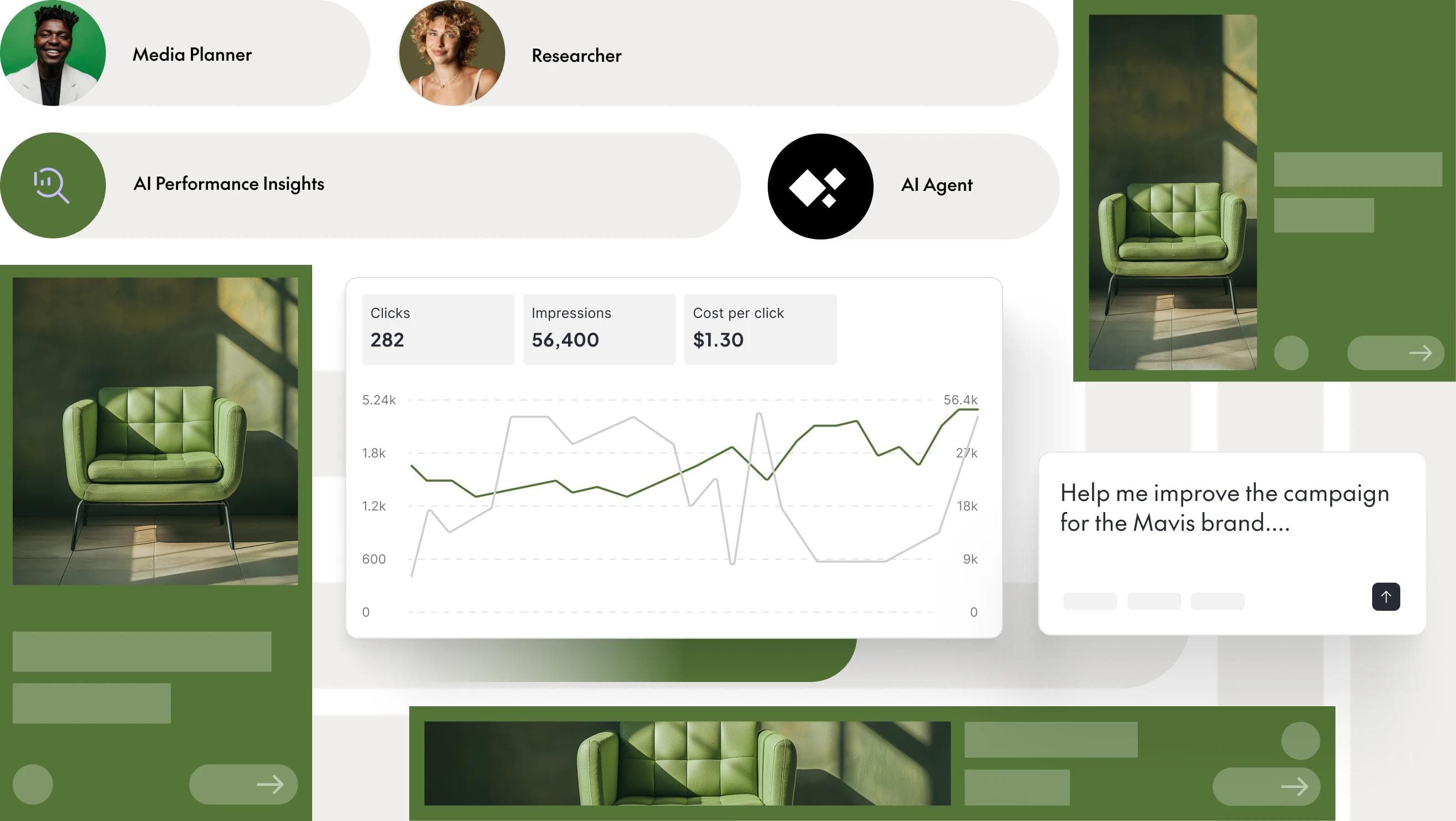
Manual resizing is the busywork that slows teams down. One design becomes fifteen formats: square for Instagram feed, vertical for Stories, landscape for Google Display, and so on. The best AI ad generators handle this automatically, producing every format from a single design - a capability covered in depth by creative automation tools built for high-volume advertising.

Here's a curated list of tools evaluated against the criteria above. Each has different strengths, so the right choice depends on your team's priorities and existing workflow.
| Tool | Best for | Key strength | Platform integrations | |
|---|---|---|---|---|
| The Brief | Teams scaling high-fidelity imagery and video ads | Realistic lighting, automated scene generation and integrated ad serving | Meta, Google, +30 ad networks | |
| Creatify | Video-first ad teams | AI avatars and URL-to-video generation | Meta, TikTok | |
| AdCreative.ai | High-volume static ad testing | AI scoring for conversion optimization | Meta, Google | |
| Canva Grow | Small businesses and Canva users | Approachable interface with Meta integration | Meta | |
| Recraft | Creative flexibility seekers | Prompt-based generation with style customization | Export-based | |
| Smartly | Enterprise global campaigns | Cross-channel automation at scale | Meta, Google, TikTok, Pinterest | |
| Celtra | Agencies with compliance requirements | High-volume production with brand control | Programmatic, social | |
| Typeface | Brand safety-focused enterprises | Enterprise AI with brand guardrails | Various | |
| Adobe GenStudio | Adobe ecosystem teams | Creative Cloud integration | Adobe workflow | |
| Bannerflow | Programmatic and display campaigns | Dynamic creative for display advertising | Programmatic networks |
The Brief functions as a connected system rather than a standalone generator. It uses brand kits to produce on-brand ad images at scale, ensuring every variation stays within guidelines. These visuals flow directly into the ad server for instant launching or real-time updates across 30+ networks to eliminate the production bottleneck.
Creatify focuses heavily on video ads, offering AI avatars and the ability to turn a URL into a video ad automatically. If your strategy leans toward video-first creative for TikTok or Meta Reels, this is worth exploring.
AdCreative.ai generates static ad images and scores them for predicted conversion performance. It's built for performance marketers who want to test high volumes of image ads quickly, though it's less suited for video or complex brand requirements.
Canva Grow brings AI ad generation into the familiar Canva interface. For small businesses or teams already using Canva, it offers an approachable entry point with direct Meta publishing. Enterprise features are more limited compared to dedicated ad platforms.
Recraft offers prompt-based image generation with strong style customization. It's flexible for teams that want creative freedom without rigid templates, though it lacks ad-specific features like platform sizing and direct publishing.
Smartly is an enterprise-grade platform for brands managing global campaigns across multiple channels. The automation capabilities are extensive, but the complexity and pricing reflect an enterprise audience.
Celtra specializes in creative automation for high-volume production with strict brand control. Agencies and enterprise teams with compliance requirements often choose Celtra for its governance features.
Typeface emphasizes enterprise AI content generation with brand guardrails. Organizations prioritizing brand safety across all content—not just ads—find value in its governance-first approach.
Adobe GenStudio integrates AI ad generation into Creative Cloud workflows. Teams already embedded in the Adobe ecosystem benefit from familiar tools, though it requires existing Adobe investment.
Bannerflow focuses on display advertising and dynamic creative production. For programmatic and display-heavy campaigns, it offers specialized features that general AI ad tools lack.
The typical workflow is more straightforward than you might expect. Most tools follow a similar four-step pattern.
First, you upload your brand foundation: logos, fonts, colors, and product images. This teaches the AI what "on-brand" means for your company. Think of a brand kit as the collection of visual elements that define your brand's look. AI product photography tools can help you prepare polished product assets before this step.

Next, you either describe what you want in a text prompt ("summer sale ad featuring our new sneakers with bold typography") or choose from pre-built templates designed for specific ad formats and goals.

Then the AI produces multiple creative options based on your inputs and brand guidelines. Better tools generate dozens of variations, giving you options to test rather than a single output to accept or reject. The AI ad design generator approach makes this step fast and scalable.

Finally, the tool adapts your creative to different formats and publishes directly to your ad platforms. One design becomes every size you actually use: square, vertical, landscape, and everything in between. Understanding standard banner sizes helps ensure your creative is ready for every placement.

Gartner reports marketing budgets flat at 7.7% of company revenue, making efficiency essential. The practical benefits come down to speed, scale, and focus:
Different teams have different priorities. Here's how capabilities match to actual use cases.
Performance marketers running paid campaigns benefit from rapid iteration and direct platform integration. AI ad generators let you test more variations without waiting on creative resources, and batch generation means you can run real A/B tests instead of guessing. The ad creation playbook offers a deeper look at how modern marketers structure this process.
For teams managing workflows and brand governance, the right tool eliminates repetitive production tasks while maintaining quality control. Workflow automation and brand kit enforcement matter most here.
Agencies juggle strict brand separation between clients, fast turnaround demands, and scalable production. Tools with workspace separation and batch capabilities handle multi-brand requirements without the chaos. The agency package is specifically designed for these needs.
Regulated industries and large-scale brands require strict brand governance. Enterprise-focused tools offer version control, approval routing and compliance features like rolling disclaimer layers that consumer apps lack. The Brief ensures every ad is compliant for the health industry and finance industry within a single secure environment..
AI ad generators aren't magic. Understanding the limitations helps you use them effectively:
The best AI ad image generators handle the production grind (the resizing, the variations, the format juggling) so your team can focus on strategy and ideas that actually move results. Machine precision handles the repetitive work. Human brilliance drives the creative direction.
For teams ready to scale creative production without sacrificing brand control, The Brief connects the entire campaign lifecycle in one intelligent system.
AI ad image generators are purpose-built for advertising, offering ad-specific sizing, brand kit integration, and platform publishing that general image tools lack.
Yes, major platforms permit AI-generated creative, though some require disclosure of AI-generated content in specific contexts.
Most tools work best with uploaded product photos rather than generating products from scratch, as AI may not accurately render specific product details.
Pricing ranges from free tiers with limited features to enterprise plans based on volume, team size, or platform integrations. Review The Brief's pricing for a current breakdown.
No, most tools are designed for marketers without design backgrounds, using templates, prompts, and brand kits to guide output. The Light Editor is a good example of a simplified interface built specifically for non-designers.
Let's put these insights into action. Build, scale, and automate campaigns with AI-powered workflows.
Ildiko Edit Orosz
May 8, 2026 - 16 min read

